Welcome to the ICQ Amateur / Ham Radio Podcast
Intro to ICQ Amateur / Ham Radio Podcast
The ICQ Amateur / Ham Radio Podcast is a free fortnightly radio talk style podcast for amateur / ham radio operators by amateur / ham radio operators.
Each episode we review the current news, discuss a technical feature and the hobby in general, and hear from our many listeners from around the world.
Download the Latest ICQ Amateur / Ham Radio Podcast Shows
In this episode, we join Martin Butler M1MRB, Dan Romanchik KB6NU, Caryn Eve Murray KD2GUT, Edmund Spicer M0MNG and Ed Durrant DD5LP to discuss the latest Amateur / Ham Radio news. Colin Butler (M6BOY) rounds up the news in brief, and the episode's feature is Q and A 2026
In this episode, we join Martin Butler M1MRB, Chris Howard (M0TCH), Martin Rothwell (M0SGL), Frank Howell (K4FMH), Bill Barnes (WC3B) and Leslie Butterfields (G0CIB) to discuss the latest Amateur / Ham Radio news. Colin Butler (M6BOY) rounds up the news in brief, and the episode's feature is What makes an Antenna Fail?
In this episode, we join Martin Butler M1MRB, Dan Romanchik KB6NU, Caryn Eve Murray KD2GUT, Edmund Spicer M0MNG and Ed Durrant DD5LP to discuss the latest Amateur / Ham Radio news. Colin Butler (M6BOY) rounds up the news in brief, and the episode's feature is Which Hotspot.
We would like to thank our and monthly and annual subscription donors for keeping the podcast advert free. To donate, please visit - http://www.icqpodcast.com/donate
In this episode, we join Martin Butler M1MRB, Chris Howard (M0TCH), Frank Howell (K4FMH) and Leslie Butterfields (G0CIB) to discuss the latest Amateur / Ham Radio news. Colin Butler (M6BOY) rounds up the news in brief, and the episode's feature is The Science of Making Distant Contacts.
In this episode, we join Martin Butler M1MRB, Caryn Eve Murray KD2GUT, Ed Durrant DD5LP and Frank Howell K4FMH to discuss the latest Amateur / Ham Radio news. Colin Butler (M6BOY) rounds up the news in brief, and the episode's feature is Ham Radio ATU’s.
In this episode, we join Martin Butler M1MRB, Chris Howard (M0TCH), Martin Rothwell (M0SGL), Frank Howell (K4FMH), Bill Barnes (WC3B) and Leslie Butterfields (G0CIB) to discuss the latest Amateur / Ham Radio news. Colin Butler (M6BOY) rounds up the news in brief, and the episode's feature is STEM and Ham Radio Works.
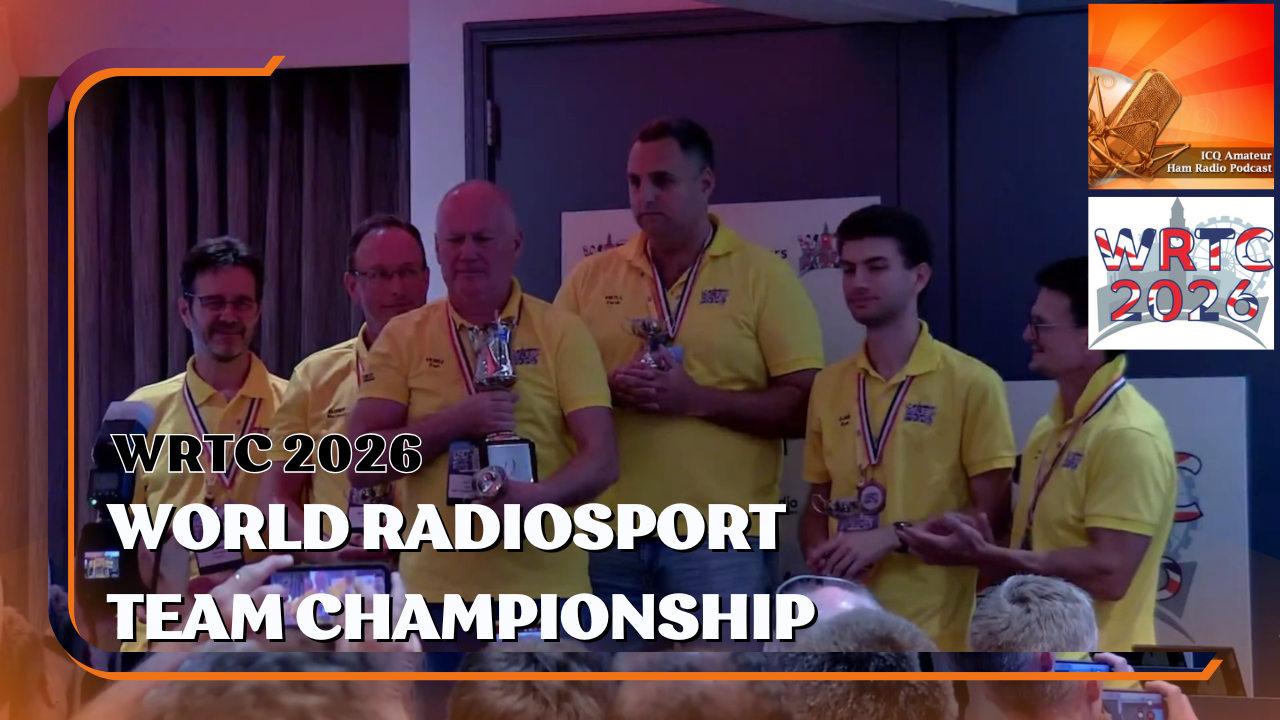
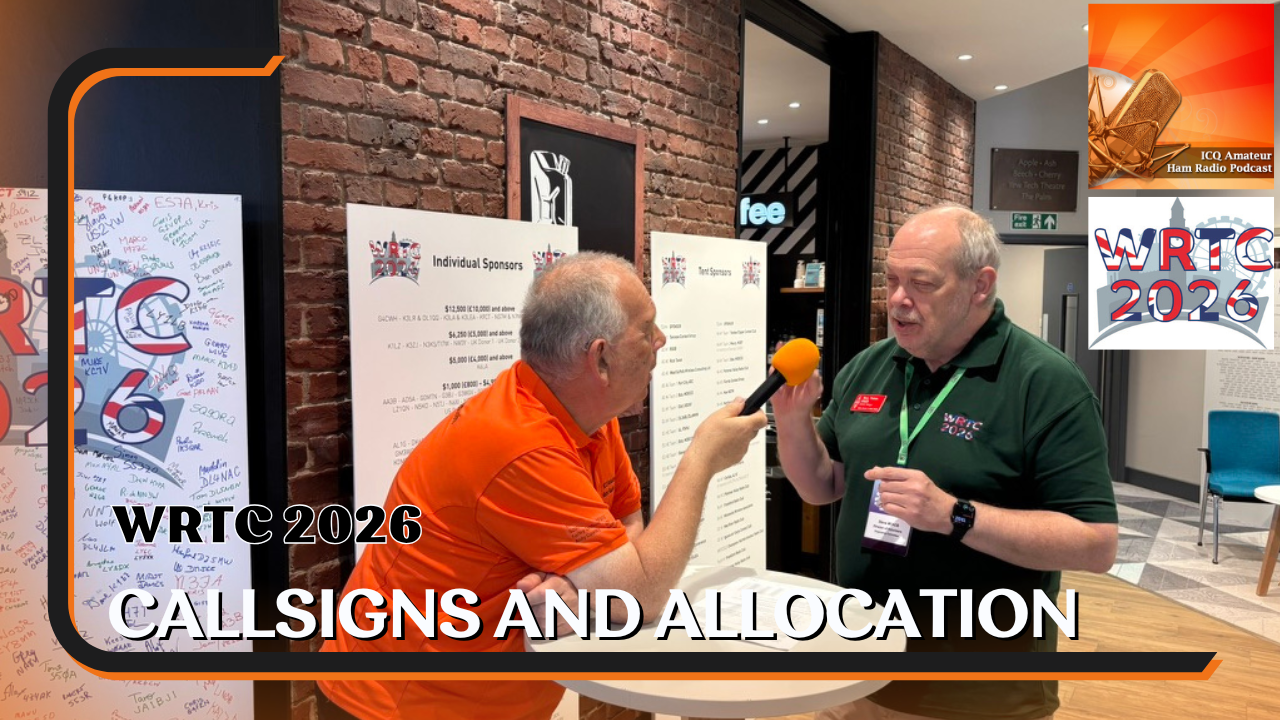
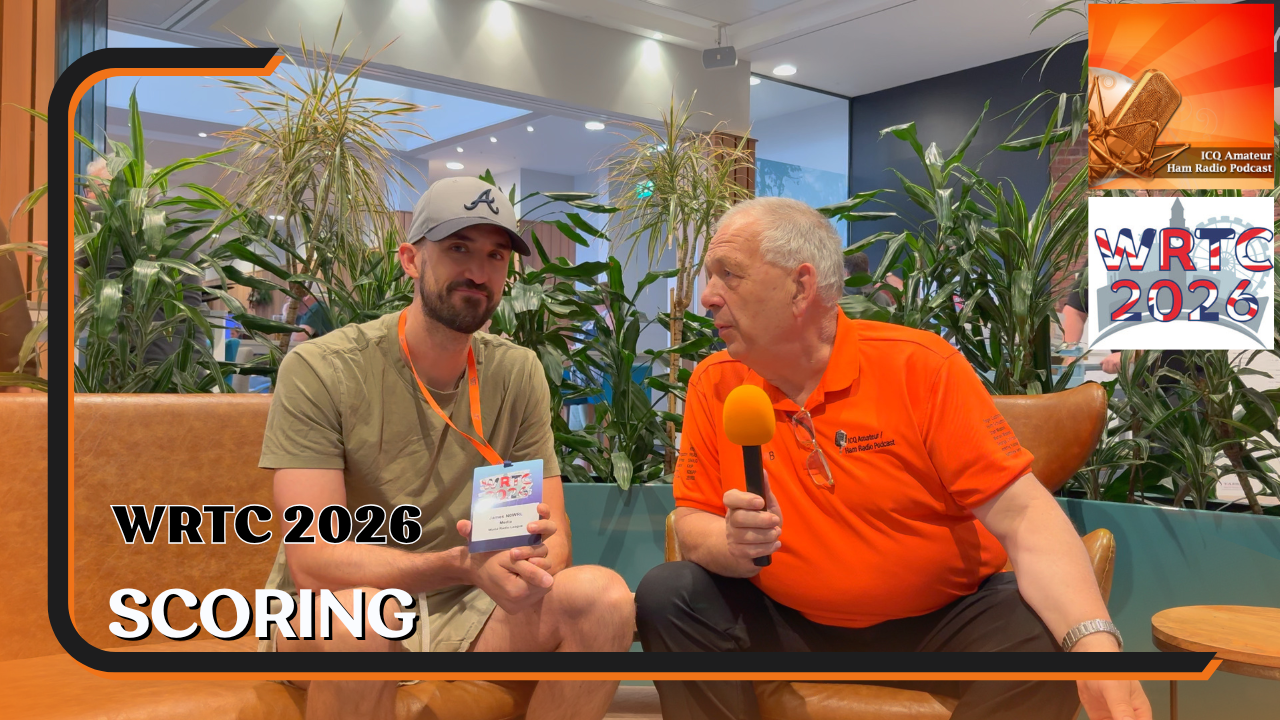
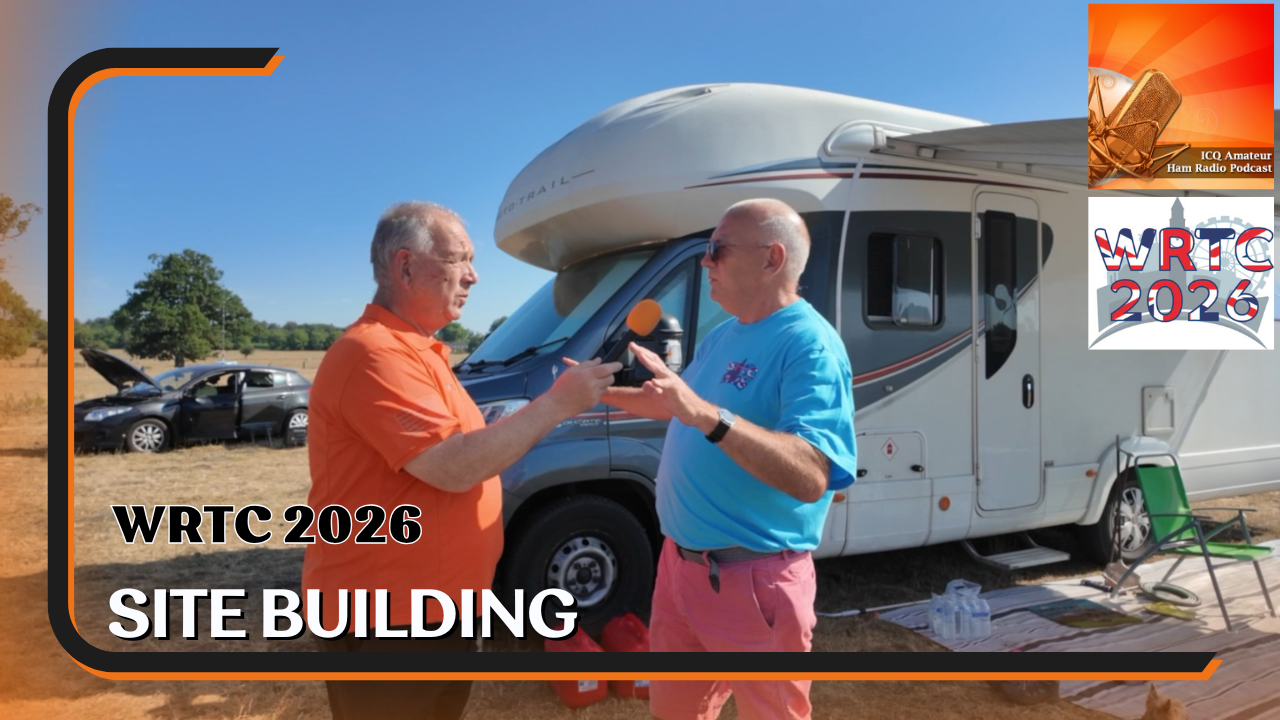
In this special episode, Martin Butler (M1MRB), Chris Howard (M0TCH) and Colin Butler (M6BOY) attended and bring you a flavour of the World Radiosport Team Championship 2026 taking place in the UK.
In this episode, we join Martin Butler M1MRB, Dan Romanchik KB6NU, Caryn Eve Murray KD2GUT and Ed Durrant DD5LP to discuss the latest Amateur / Ham Radio news. Colin Butler (M6BOY) rounds up the news in brief, and the episode's feature is a Taste of Ham Radio Friedrichshafen.
In this episode, we join Martin Butler M1MRB, Chris Howard (M0TCH), Martin Rothwell (M0SGL), Frank Howell (K4FMH), Bill Barnes (WC3B) and Leslie Butterfields (G0CIB) to discuss the latest Amateur / Ham Radio news. Colin Butler (M6BOY) rounds up the news in brief, and the episode's feature is Windows 10 to Linux
In this episode, we join Martin Butler M1MRB, Dan Romanchik KB6NU, Caryn Eve Murray KD2GUT, Edmund Spicer M0MNG and Ed Durrant DD5LP to discuss the latest Amateur / Ham Radio news. Colin Butler (M6BOY) rounds up the news in brief, and the episode's feature is World Cup 2026 Special Event Station.
In this episode, we join Martin Butler M1MRB, Martin Rothwell (M0SGL), Frank Howell (K4FMH), Bill Barnes (WC3B) and Leslie Butterfields (G0CIB) to discuss the latest Amateur / Ham Radio news. Colin Butler (M6BOY) rounds up the news in brief, and the episode's feature is New Lead Free Solder.
Latest Amateur / Ham Radio News

Rideshare launches have become one of the easiest ways for the amateur satellite community to get hardware into orbit, and Transporter-18 just delivered one of the strongest showings yet.
Six satellites from three AMSAT organisations reached orbit following the launch of SpaceX's Transporter-18 rideshare mission from Vandenberg Space Force Base in California on 1st October. The international lineup included three ERMINAZ-2 PocketQubes from AMSAT-DL in Germany, HADES-L and UNNE-1B from AMSAT-EA in Spain, and SanoSat-2 from AMSAT Nepal. The spacecraft rode aboard OSSIE-D, the first orbital transfer vehicle developed by Spanish space transportation company UARX Space, which began deploying its payload of small satellites after separating from the Falcon 9 upper stage.

Some milestones only last minutes, but the impact sticks around a lot longer. This is one of those stories.
Chile has just marked its first-ever direct amateur radio contact between a public school and the International Space Station — a moment that lasted exactly 10 minutes, but one the students involved are unlikely to forget any time soon.

The broadcast landscape keeps quietly shrinking on the commercial side, according to the latest FCC licensing figures — while noncommercial FM keeps doing the opposite.
In the FCC's latest totals, dated 30th September, commercial AM stations dropped to 4,258 — down 42 from last quarter, and a decline of 142 signals overall since September 2024.
Commercial FM stations continued their own downswing too, falling by 20 to 6,540. Ten of those cancellations came from a single owner, Hispanic Target Media, which surrendered ten FM licenses outright. This marks the seventh consecutive quarter of modest declines for commercial FM, a category that peaked back in December 2019.
If you want to see the longer-term trend for yourself, there's a 10-year interactive breakdown of station counts built directly from FCC data.

If you like your amateur radio with a bit of a cardio workout attached, mark the calendar: the RaDAR Rally returns on Saturday 7th November 2026.
RaDAR — Rapid Deployment Amateur Radio — is exactly what it sounds like: a fast-paced, genuinely challenging outdoor activity where you set up a portable station, make five contacts, pack everything back down, and move to a new location — repeating that whole cycle as many times as you can within a four-hour window.
Some stories in this hobby connect you straight back to the earliest days of radio — this is one of them.
When United Nations Day is marked on 24th October, a message will go out to the world via a VLF frequency transmitted from Sweden. Inside the Grimeton Radio Station, the historic Alexanderson alternator — more than a century old — will be tuned to 17.2 kHz, where it will transmit in CW, under the callsign SAQ, words promoting "peace, unity and global partnerships."
If you've been eyeing up APRS Connect since its Android debut back in August, the wait's over: it's now live on the App Store for iPhone.
APRS Connect, the messaging-first APRS client that launched on Android in August, is now available for iOS 16.4 and later. It's free to install and use over APRS-IS. Connecting a physical radio, along with a handful of advanced features, sits behind APRS Connect Pro, a subscription that comes with a 7-day free trial.
Every so often a mode comes along that genuinely threatens to reshape how we talk on HF. Fifty years ago, that mode was single sideband, which overtook AM as the dominant voice mode largely because it packed a signal into roughly half the bandwidth. Now there's a new contender aiming to do the same thing all over again.
FreeDV has introduced a new digital voice mode called RADE — short for Radio Autoencoder — which occupies half the bandwidth of an SSB signal, while reportedly delivering more natural-sounding speech than earlier digital voice modes have managed.
Getting young people into amateur radio often comes down to having the right support network behind a school club — and the Azores has just built exactly that.
It's already been a busy year for school amateur radio clubs in Portugal, and particularly in the Azores, where clubs have recently started coordinating joint activities and sharing knowledge through a newly formed group known as RERA.

Spectrum congestion isn't just an amateur radio problem — it's now a public safety one, according to two of the United Nations' leading technical agencies.
The International Telecommunication Union (ITU) and the World Meteorological Organisation (WMO) have called on governments to introduce tougher protections against radio spectrum interference, warning that the same frequencies used to monitor climate, forecast weather, and deliver early warning messages are increasingly being crowded out by satellite and wireless systems.

Every POTA or SOTA activator knows a session can throw up surprises. Few, though, turn into a genuine emergency response.
Michael Miller, KH6ML, had just logged his 11th QSO during a POTA/SOTA activation on 16th September at Hawaii's Diamond Head when his 12th contact of the day happened right there on the summit — not over the air, but in person. A visitor approached him for help: a woman had collapsed inside the summit's observation bunker after hiking the trail.
Good manners on the air never go out of style, and now there's a net dedicated to making sure they don't. Time to brush up on your on-air etiquette — and your general manners — because a new net has launched with exactly that in mind.
The Sunflower GAPT Net does a bit of both things its name promises. Launched by the Sunflower Linked System, the net lives up to its title: Good Amateur Practice and Trivia — GAPT for short. Net control duties fall to Daryl Stout, NK5LA.
There's something wonderfully incongruous about a modern HF rig calling CQ from a site that predates the wheel. That's exactly what just happened in southeastern Turkey.
Amateur radio operators broadcasting from Karahantepe — part of the Taş Tepeler Neolithic network, pronounced "carra-hon-TEP-pay" — connected with nearly 1,000 stations across 40 countries during a three-day operation aimed at putting the ancient site on the global map.
Thoughts from our Presenters
It’s nearing the time of Churches and Chapels on the Air again! Here in the U.S., Churches and Chapels on the Air (CHOTA) is a fairly new concept. A few years ago, I was fortunate to play a leading role a couple in getting a few operators on this side of the pond to get on the air for this very special event. For over a half century now, it has been led by WACRAL,

Last week, I taught a one-day Tech Class at DEFCON, arguably the premiere cybersecurity/hacker conference in the U.S. It was my fourth year teaching this class under the auspices of the Ham Radio Village. This year, there were 66 people in the class.
If there’s anything that radio amateurs like to kvetch about it’s licensing. How many license classes should there be? How difficult should the tests be? What kind of privileges should each class get?
Back in the 1950s and 1960s, the debate was incentive licensing. Incentive license was supposed to be an effort to get radio amateurs to upgrade their technical skills. As you progressed up the ladder from Novice to Extra, you received more operating privileges, mainly on the HF bands. In practice, however, it stripped privileges from General Class hams, and so many of them got upset with the ARRL—which backed the program—that I believe it was the start of the ARRL’s demise.
This summer, I have been activating the Iron Belle Trail, US-13184, a lot. This is a newly-added POTA entity and it runs through Bandemer Park, which is less than a mile from my house as the crow flies, and less than a mile and a half by car. I can be on the air in 20 minutes or less from the time I leave my house.
If you’ve read my blog at all in the past, you know I’m not a fan of David Minster, NA2AA, ARRL’s current CEO. He’s driving down membership, which is now well under 20% of licensed radio amateurs. He’s driving away staffers, too. The latest to go is Steve Goodgame, K5ATA, ARRL’s Education and Learning Manager. In my humble opinion, his tenure has been a disaster.

There is a quiet irony at the heart of amateur radio. Ours is a hobby built on the principle of communication — of reaching out across continents, of connecting with strangers in the ether, of broadcasting our presence to the world. We accept, willingly and openly, that our callsigns are public. Our names and addresses are registered with national regulators. Anyone with internet access and a passing curiosity can look us up. That is the deal we sign when we get our licence, and most of us are perfectly comfortable with it.
But there is a world of difference between information that is publicly available and information that is actively handed to someone without our consent. And that distinction — painfully obvious in law, in ethics, and in plain common sense — appears to be one that our national organisations are struggling to grasp.

Last August, I got an email from Skip, K4EAK. He wrote: I’m a member of an RV club (the Family RV Association) which has an amateur radio chapter. FRVA’s annual convention will be next March in Perry, Georgia, and ARC is going to do a one-day prep session, followed by the Element 2 Tech exam the next morning. We’ll be using your “No Nonsense” guide, encouraging the participants (as you suggest) to read through it several times, take a few practice tests, and then attend the session before taking the exam. We also plan to follow your prep-day schedule and outline of topics.

Recent conflicts in Ukraine and across the Middle East have exposed a recurring and uncomfortable truth: when governments or military actors want to control the narrative, they don’t just shape the message—they switch off the medium. Internet shutdowns, cellular blackouts, and the targeted destruction of communications infrastructure have repeatedly severed citizen journalists from the outside world.
For a generation raised on always-on connectivity, the proposed solution is often more connectivity—satellite internet services such as Starlink. These platforms undeniably provide critical lifelines for journalists and NGOs operating in hostile environments. But from a systems engineering perspective, they introduce a familiar risk: centralisation. No matter how advanced, any network dependent on a relatively small number of ground stations, satellites, or control systems represents a potential single point of failure—whether through technical disruption, regulatory pressure, or direct attack.
Earlier this week, the Dayton Hamvention announced its 2026 award winners. This year’s Technical Achievement Award winner is Bob Famiglio, K3RF. It’s hard to argue with this choice. As the Hamvention press release points out….
Latest ICQ Amateur / Ham Radio Podcast Videos



In this episode, we join Martin Butler M1MRB, Chris Howard (M0TCH), Martin Rothwell (M0SGL), Frank Howell (K4FMH), Bill Barnes (WC3B) and Leslie Butterfields (G0CIB) to discuss the latest Amateur / Ham Radio news. Colin Butler (M6BOY) rounds up the news in brief, and the episode's feature is Antennas for QRP and POTA.